
Date: Friday, November 6, 2026 · Reading time: 5 minutes · Category: Medication Safety & Health Literacy
Prescription instructions can be hard to interpret, especially when they use short phrases like “twice daily” or “take with food.” Asking what they mean is part of taking care of your health, not a sign that you should already know.
Understanding what a medicine is for, how to take it, and what to watch for can support safer care. This guide offers general information. Your own prescription label and guidance from your prescriber or pharmacist should determine how you take a specific medicine.
Start with the label
When you pick up a prescription, check that the label is for you and that the medicine name, strength, and directions match what you expect. A medicine may look different after a refill or if the pharmacy has supplied a different manufacturer. If you are unsure, ask before taking it.
Look for:
- Medicine name and strength: The strength tells you how much medicine is in each tablet, capsule, or measured amount. It is not always the same as the dose you should take.
- Directions: Check how much to take, how often, and whether there are special instructions.
- Refills and expiration information: Ask the pharmacy when you should request a refill and how to dispose of medicine you no longer need.
- Warnings or additional information: Read any labels or medication guides that come with the prescription. Ask the pharmacist to explain anything unclear.
For liquid medicine, use the measuring device supplied or recommended by the pharmacy, not a kitchen spoon. Don’t crush or split a tablet or open a capsule unless a pharmacist or prescriber confirms it is safe.
What common directions usually mean
Short instructions can leave important details out. These phrases are a starting point for a conversation, not a substitute for instructions specific to your medicine.
- “Take with food”: The medicine may need food in your stomach or may be easier to tolerate with a meal. The timing can vary. Ask whether to take it before, during, or after eating, and whether any particular foods or drinks should be avoided.
- “Twice daily”: This means taking two doses in a day, but the best spacing depends on the medicine. Do not assume it always means exactly every 12 hours.
- “Every 12 hours”: This gives a specific interval, about 12 hours between doses. Ask how to fit it into your daily routine.
- “As needed”: Take the medicine only for the reason and within the limits on the label. Confirm the minimum time between doses, the maximum amount in a day, and how long you should use it.
- “Do not stop suddenly” or “taper”: Some medicines need to be reduced gradually. Don’t change or stop a dose without contacting your prescriber or pharmacist.
If the directions seem vague or conflict with what you were told, pause and check with the pharmacy or prescriber. If you miss a dose, ask what to do for that specific medicine. Do not take an extra dose to make up for one unless a health professional tells you to.
Why taking medicine as directed matters
A medicine may be prescribed to treat a condition, reduce symptoms, or lower the chance of a future health problem. Taking it as directed gives your care team a clearer picture of whether it is working and whether the plan needs to change.
A routine can help. You could use a phone reminder, a written schedule, or a pill organizer if a pharmacist confirms it is appropriate for your medicines. Keep a current list of prescriptions, over-the-counter medicines, vitamins, and supplements. Note when a dose changes, and bring the list to appointments.
If taking a medicine is difficult because of cost, side effects, a complicated schedule, trouble swallowing, or another reason, tell your care team. They may be able to discuss alternatives, simplify the schedule, or connect you with practical support. Needing help with a medication routine is not a personal failure.
Side effects: what to do
Side effects are unwanted effects that can happen with a medicine. Some are mild; others need prompt attention. Ask which effects are common, which should be reported, and how soon to get help. Write down what you notice and when it happens so you can describe it clearly.
Don’t stop a prescription abruptly or change the dose on your own, even if you feel better or are concerned about a side effect. Stopping suddenly can be risky for some medicines, and your prescriber may need to guide a gradual change. Contact your prescriber or pharmacist to discuss what you are experiencing and what to do next.
Seek urgent help for severe or rapidly worsening symptoms, signs of a serious allergic reaction, or a suspected overdose. Call 911 for a medical emergency. If you are unsure how serious a symptom is, contact a health professional for advice.
Check for interactions, including supplements
An interaction happens when one medicine, food, drink, supplement, or health condition changes how another medicine works or affects its safety. Interactions can involve prescription medicines, over-the-counter products, vitamins, herbal products, and alcohol.
Tell your pharmacist and prescriber about everything you take, including products used only now and then. Don’t assume a supplement is automatically safe because it is labeled “natural.” Before starting a new medicine or supplement, ask a pharmacist or prescriber to check it against your current list. When possible, using one pharmacy can help the pharmacist review your medication history.
Make the pharmacy conversation work for you
You can ask these questions when you pick up a medicine or speak with your care team:
- What is this medicine for, and how will I know if it is working?
- How much should I take, and at what times?
- Should I take it with food, without food, or apart from other medicines?
- If it is “as needed,” what is the maximum amount and how often can I take it?
- What should I do if I miss a dose or have a side effect?
- Could it interact with my prescriptions, over-the-counter medicines, vitamins, supplements, food, or alcohol?
- Can I stop it if I feel better, or does it need to be reduced gradually?
- Is there a lower-cost option, a generic, or written information in my preferred language?
It can help to bring a written medication list, take notes, or ask someone you trust to join the conversation. If an answer is unclear, try: “Could you explain that in everyday language and write down the schedule for me?” FDA guidance also encourages patients to tell pharmacists about barriers such as difficulty reading labels, remembering doses, paying for medicines, or communicating in English. These are practical concerns worth raising, not reasons to feel embarrassed.
Access and communication do not work equally well for everyone. Cost, pharmacy hours, language access, disability, and past experiences of being dismissed can all make medication care harder to navigate. If you feel your concern is not being heard, you can ask for an interpreter, request written instructions, or ask the pharmacist to review the directions with you again.
Gather Round app update: clearer medication education
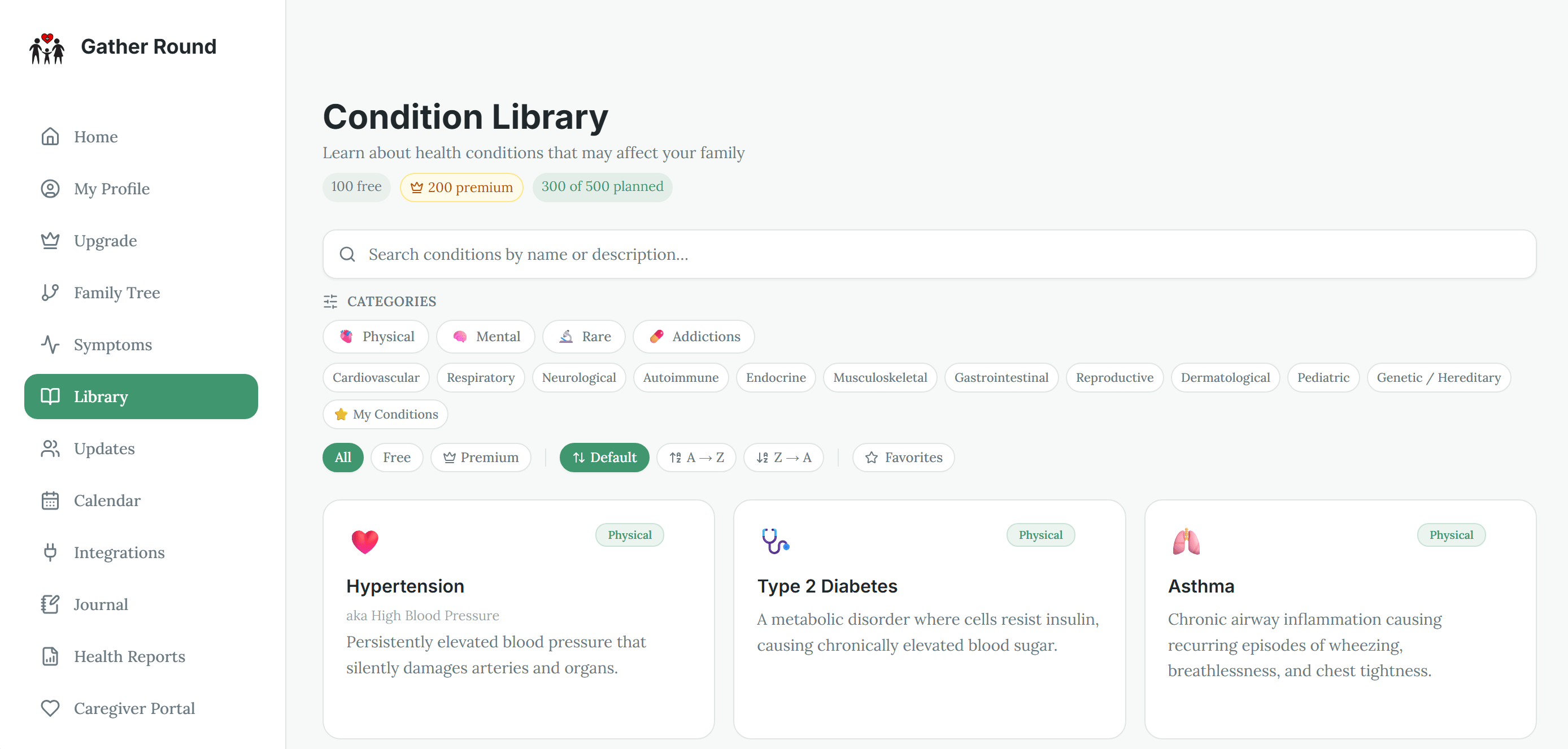
Gather Round is expanding the educational content in its Condition Library to include plain-language explanations of prescription medications, developed with help from its clinical advisor. The goal is to make it easier to understand what a medicine may be used for and what questions to bring to a care conversation.
Explore the Preventive Health Library for accessible health information, or learn more about the Gather Round app. Educational resources can support health literacy and proactive healthcare, but they do not replace advice from a pharmacist or prescriber who knows your situation.
Sources
- U.S. Food and Drug Administration: Tips for talking with your pharmacist
- MedlinePlus: Medicine safety, filling your prescription
- MedlinePlus: Taking medicines. What to ask your provider
This article provides general health education, not individual medical advice. Follow the instructions for your specific medicine and consult your prescriber or pharmacist with questions.