
Date: November 5, 2026
Estimated reading time: 6 minutes
Category: Preventive Health & Caregiving
Supporting a parent as their needs change can involve health decisions, daily tasks, appointments, and family coordination. You don’t have to solve everything at once. Noticing changes early, asking what matters to your parent, and sharing responsibilities can help you plan before a crisis.
Care looks different in every family. A parent may need occasional help with errands, regular support at home, or more coordinated care. The goal is to support their safety and health while respecting their choices and independence as much as possible.
Signs your parent may need more help
A single missed appointment or untidy room does not necessarily mean someone can no longer manage independently. Look for changes over time and ask your parent how things feel from their perspective.
Possible signs include:
- Daily tasks becoming harder, such as preparing meals, bathing, dressing, or keeping the home safe.
- Difficulty managing health routines, including missed or mixed-up medications, trouble arranging appointments, or confusion about care instructions.
- Changes in mobility or safety, such as falls, difficulty walking, or growing concerns about driving.
- Changes in health or wellbeing, such as unexplained weight changes, isolation, low mood, or increasing difficulty with memory or decision-making.
These changes can have many causes, including illness, medication effects, vision or hearing changes, or a difficult home environment. They are reasons to ask questions, not a basis for diagnosing your parent yourself. A significant change in thinking, personality, or ability to manage daily life deserves attention from a healthcare professional. The National Institute on Aging (NIA) offers guidance on recognizing when an older adult may need help.
Start the conversation with respect
Conversations about health and independence can feel personal. Choose a calm time, rather than starting after an argument or stressful incident. Begin with something specific you’ve noticed, and leave room for your parent to explain.
You might say:
“I’ve noticed it’s been harder to keep track of appointments lately. How does it feel to you? Is there something you’d like help with?”
Try to:
- Ask what support they want before offering solutions.
- Offer choices, such as arranging rides, setting reminders, or attending an appointment together.
- Focus on one concern at a time.
- Agree on a small next step and check in again.
Your parent’s preferences, culture, language, relationships, and privacy matter. Include them in decisions whenever possible. If family members disagree, returning to the parent’s stated wishes and immediate needs can help guide the discussion.
Organize medications and appointments
A reliable system can reduce confusion and make health visits more useful. Start with a current list of prescription medicines, over-the-counter products, vitamins, and supplements. Include doses and schedules, and update it when something changes.
Ask a pharmacist or clinician whether a pill organizer, pharmacy-prepared packaging, reminders, or a simpler schedule may help. Don’t stop or change a medication without first checking with the prescribing clinician or pharmacist. Repeated missed or duplicated doses are a signal to review what support is needed, not a reason to blame your parent.
Before appointments, gather the medication list and write down:
- What has changed and when it began
- Any falls, new symptoms, or challenges with daily tasks
- Questions your parent wants answered
- Names of other clinicians involved in their care
With your parent’s permission, you can attend, take notes, and ask the clinician to explain next steps in plain language. The NIA’s appointment tips for caregivers can help you prepare.
You can say: “We’ve noticed this change since about [time]. What might be contributing to it, and what should we watch for?” If a concern is dismissed as “just aging,” describe the specific change and ask what else could explain it. Age-related assumptions or other forms of medical bias can make it harder for older adults to be heard. You can request an interpreter or ask for instructions in a format your family can use.

Make the care plan shared, not one person’s job
Adult children may live nearby or coordinate from another city. Either way, the work can become difficult to manage alone. Write down recurring tasks (such as rides, grocery shopping, appointment scheduling, and check-ins) and ask family or trusted friends to take on specific responsibilities they can manage.
A useful plan names who is doing what and when. It can also include key contacts, appointment dates, and where important information is kept. The CDC’s care-planning guidance can help families think through ongoing support.
Finding help is not always straightforward. Cost, limited paid leave, transportation, broadband access, language barriers, or a shortage of local services can restrict choices. These are structural barriers, not personal failures. In the United States, the Eldercare Locator can connect families with local aging services. Call 1-800-677-1116 to ask about options in your area.
Notice caregiver strain and seek support
Caregivers have health needs, too. Persistent exhaustion, trouble sleeping, irritability, anxiety, sadness, isolation, or letting your own appointments and meals slide can be signs that the workload needs to change.
Try to build regular breaks into the plan. Ask someone to cover a specific task, look into respite care, or speak with a healthcare professional about stress and sleep. The CDC’s caregiver self-care resources offer practical ideas. You can tell your own clinician: “I’m supporting a parent, and the stress is affecting my health. What support or next step would you recommend?”
If your parent has sudden confusion, a serious fall or injury, chest pain, trouble breathing, or signs of stroke, seek urgent medical help. For immediate danger, contact emergency services.
Gather Round app update: guidance for older adults
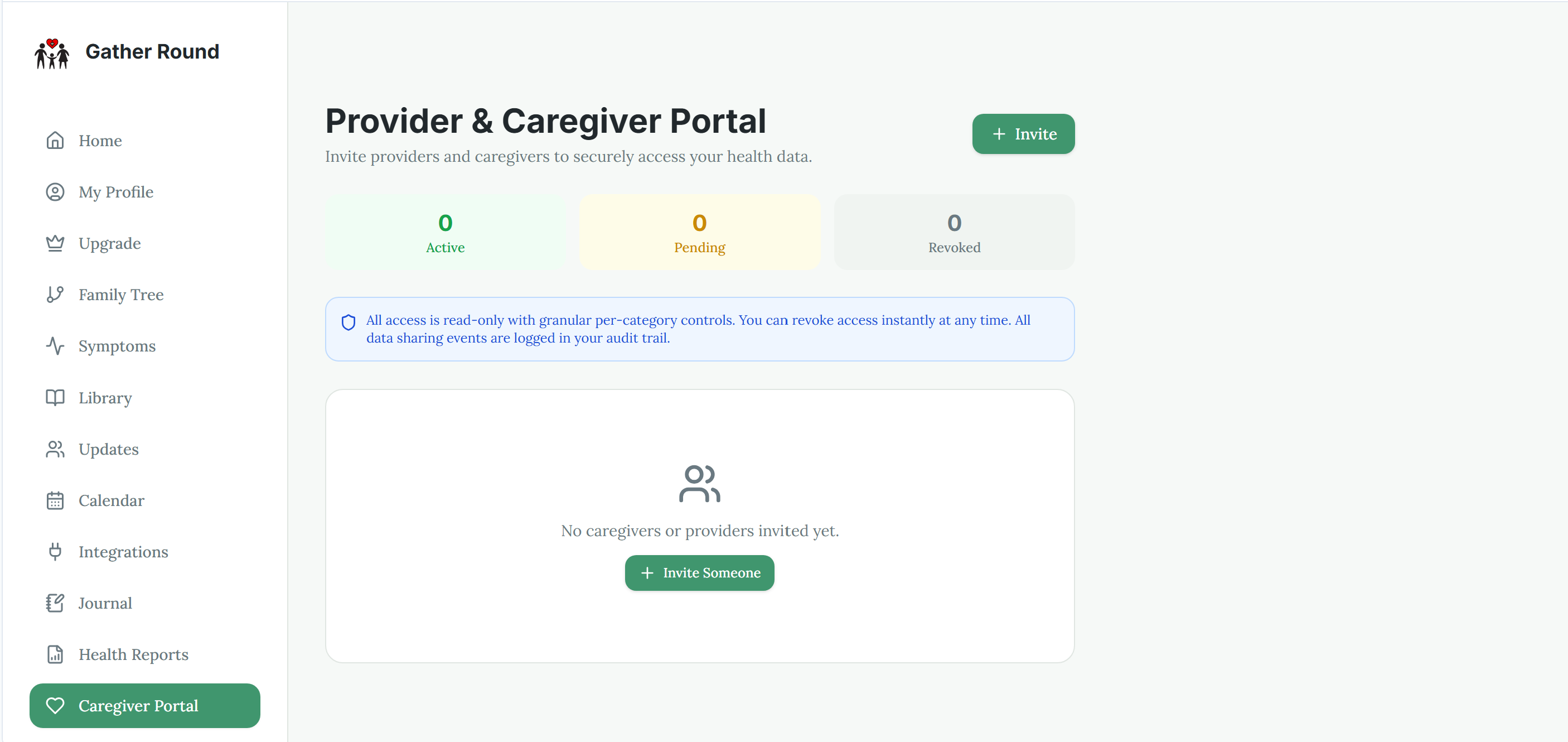
The Gather Round Caregiver Portal continues to grow, supporting families as they organize care and share information with permission. The app’s Condition Library now includes geriatric-focused health information searchable by life segment, making it easier to find guidance relevant to older adults.
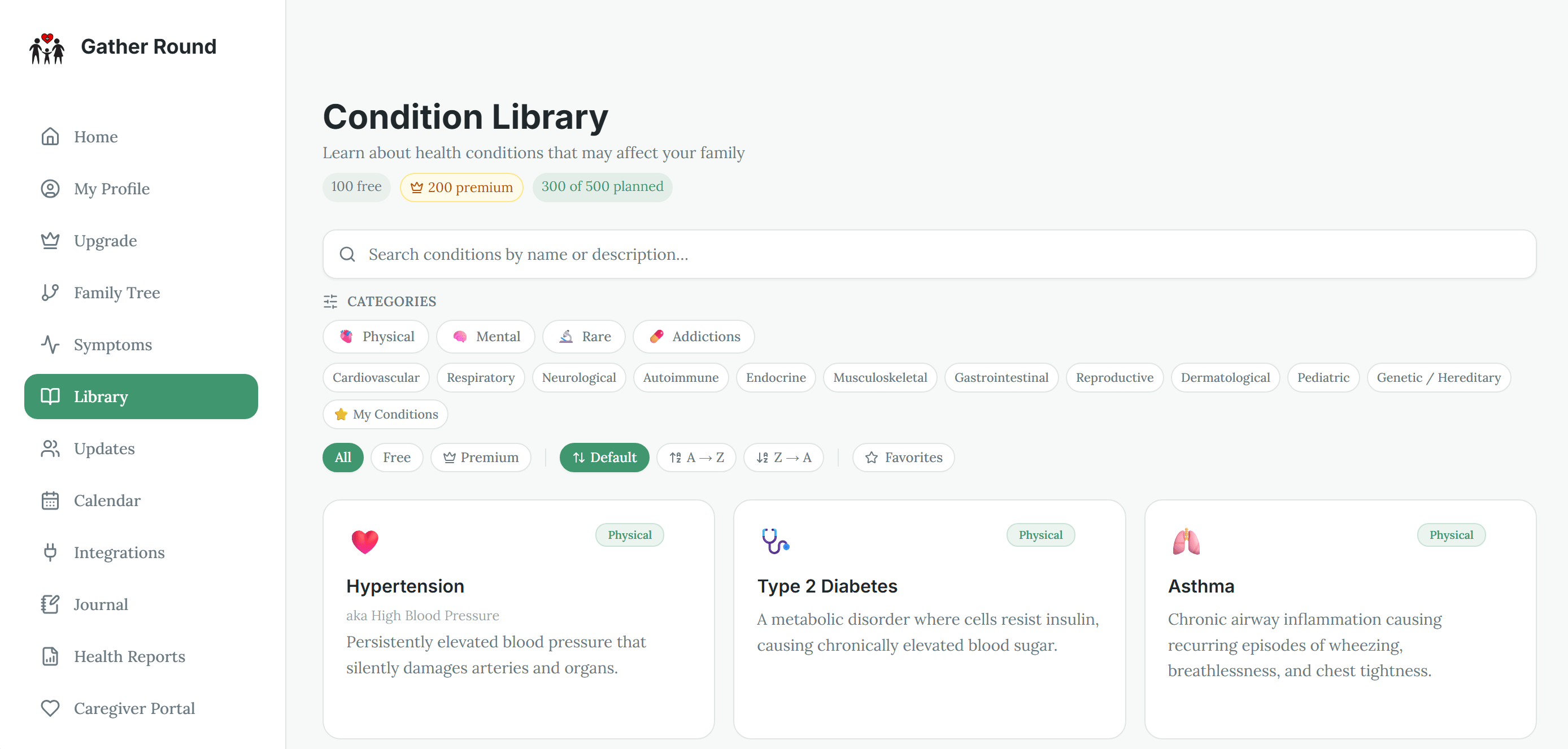
The library provides health education to support a more informed wellness journey; it does not replace advice from a healthcare professional. Explore the Condition Library and Gather Round app.
For clarity on data handling: the app is the interface for authorized users; user health information is held in Gather Round’s HIPAA-compliant Back4App backend; and the public WordPress CMS holds educational and product content, not user health data. The Caregiver Portal includes read-only sharing, category-level access controls, the ability to revoke access, and an audit trail. Sharing should be based on the person’s consent; app access does not automatically authorize access to a clinic’s records.

Questions to bring to a healthcare visit
- “What could be contributing to this change?”
- “What symptoms should prompt a call or urgent care?”
- “Could any medications or supplements be affecting this?”
- “What support would help my parent stay as safe and independent as possible?”
- “Can you explain the plan in plain language and write down the next steps?”
Small steps (one conversation, one medication list, one shared task) can make proactive healthcare more manageable for your parent and for you.
Reputable sources
- National Institute on Aging: Does an Older Adult in Your Life Need Help?
- National Institute on Aging: Taking Someone to a Doctor’s Appointment
- CDC: Steps for Creating and Maintaining a Care Plan
- CDC: Caring for Yourself When Caring for Another
- Administration for Community Living: Eldercare Locator
Gather Round provides health education and organization tools, not diagnosis or emergency care. Consult a qualified healthcare professional about medical concerns.