

Date: Tuesday, November 3, 2026
Estimated reading time: 6 minutes
Health category: Medication Safety & Complementary Health
Natural remedies and complementary approaches are part of many people’s health routines. They may reflect personal values, cultural traditions, or a desire to support well-being. Considering them is not a reason for judgment. But “natural” does not automatically mean safe to combine with prescription medicine, or proven to work.
Here’s how to weigh the evidence, reduce risks, and talk about your choices with a health professional.
What do CAM, CATs, and “natural remedies” mean?
Complementary and alternative medicine (CAM) is a broad term for health products and practices outside, or alongside, conventional medical care. Practices may include yoga, meditation, or acupuncture. Products may include herbs, vitamins, and other dietary supplements.
“Complementary” approaches are used alongside conventional care. “Alternative” approaches are used instead of it. That distinction matters: a complementary practice may support someone’s care, while delaying proven treatment for a serious condition can be harmful.
Gather Round uses complementary and alternative therapies (CATs) to describe practices and complementary and alternative medicines (CAMs) for products. These terms cover very different things. Evidence and safety should be considered for each specific product or practice, not assumed from the category.
What does the evidence support?
Evidence is not all-or-nothing. Some approaches have been studied for specific uses; many others have limited or inconsistent research. Even when studies suggest a benefit, that does not mean a product works for everyone, treats every condition, or is safe with every medicine.
Examples help show the difference:
- Yoga and mindfulness-based programs may help some adults manage chronic low-back pain. Research suggests possible improvements in pain or function, but the benefits are often modest, and the evidence does not show these practices are cures or better than every other treatment.
- Cranberry products may help reduce the risk of recurrent urinary tract infections for some women, but findings are limited and inconsistent. Cranberry products do not treat an active UTI. Contact a health professional if you think you have one.
- St. John’s wort has some evidence of benefit for mild to moderate depression. It also has a well-documented risk of interacting with many medicines, making professional guidance especially important.
A useful question is not just “Has this been studied?” but “For whom, for what purpose, and compared with what?” Research may involve a particular dose, product, or population that differs from what is sold or used in everyday life.

How can supplements interact with prescription medicines?
Supplements can change how a medicine is absorbed, broken down, or removed from the body. That may cause a prescription to have more effect than intended, or less. Some products may also add to a medicine’s effects, such as increasing bleeding or drowsiness.
Examples include:
- St. John’s wort can make several medicines less effective, including some birth control pills, transplant medicines, heart medicines, and cancer treatments. Combining it with certain antidepressants can also cause serious side effects.
- Ginkgo taken with warfarin, a blood thinner, may increase the risk of major bleeding.
- High-dose green tea products may affect levels of some prescription medicines.
These are examples, not a complete interaction list. Risk depends on the exact product, dose, formulation, prescription, and a person’s health. People taking blood thinners, transplant or cancer medicines, seizure medicines, antidepressants, heart medicines, or hormonal birth control should check before starting a supplement. The same goes for people who are pregnant, breastfeeding, planning surgery, or considering a product for a child.
Do not stop or change a prescribed medicine on your own because you are considering a natural remedy. Ask your prescriber or pharmacist how to approach it safely.
Supplement quality: what FDA oversight does and does not mean
In the United States, dietary supplements are regulated differently from prescription drugs. The FDA does not approve supplements for safety and effectiveness before they are sold, as it does for medicines. Manufacturers are responsible for product safety and accurate labeling, and FDA can act against products that are adulterated or misbranded.
That does not mean every supplement is contaminated, or that every product is unsafe. It does mean a label alone cannot guarantee that the contents match the claims, that the product works, or that it is appropriate for you. FDA has warned that some products marketed as supplements contain undeclared drug ingredients or other harmful substances.
Be cautious of products that:
- Promise a cure, fast results, or a guaranteed outcome.
- Claim to replace prescribed care or work for many unrelated conditions.
- Hide ingredient amounts in a “proprietary blend.”
- Rely on dramatic testimonials or pressure you to buy immediately.
- Are marketed for rapid weight loss, sexual enhancement, or bodybuilding: categories in which FDA has found products with hidden ingredients.
If you decide to use a supplement, keep its original container so your care team can see the full label, ingredients, and dose. Ask a pharmacist or clinician about the specific product rather than relying on a general online interaction checker.
Make your health conversation easier
People may not mention a supplement because they consider it food, tea, a family tradition, or something outside the clinician’s scope. Some may also worry about being dismissed. A respectful conversation should leave room for both evidence and personal context.
Bring or write down everything you take or use, including prescriptions, over-the-counter medicines, vitamins, herbs, teas, powders, oils, and topical products. Include the amount and how often you use it.
You can say:
“I’m considering this product for [reason]. Here is the exact label and dose. Could it interact with my medicines or affect my health conditions?”
You can also ask:
- “What evidence supports this for my specific goal?”
- “Are there safer or better-studied options?”
- “What side effects should I watch for, and when should I stop?”
- “Could this affect a procedure, pregnancy, or another treatment?”
- “Can we add it to my medication list?”
If you notice a new or worsening symptom after starting a product (such as unusual bruising, bleeding, severe drowsiness, or a return of symptoms your medicine had controlled) contact a health professional promptly. Seek emergency care for severe bleeding, trouble breathing, fainting, or other severe symptoms.
Access to trustworthy health information and respectful care is not equal for everyone. Cultural knowledge and traditional practices deserve respectful discussion; research also needs to include diverse communities. If you feel your concerns are not being heard, you can ask a pharmacist, another clinician, or a trusted health professional to review the product with you.
A Gather Round app update
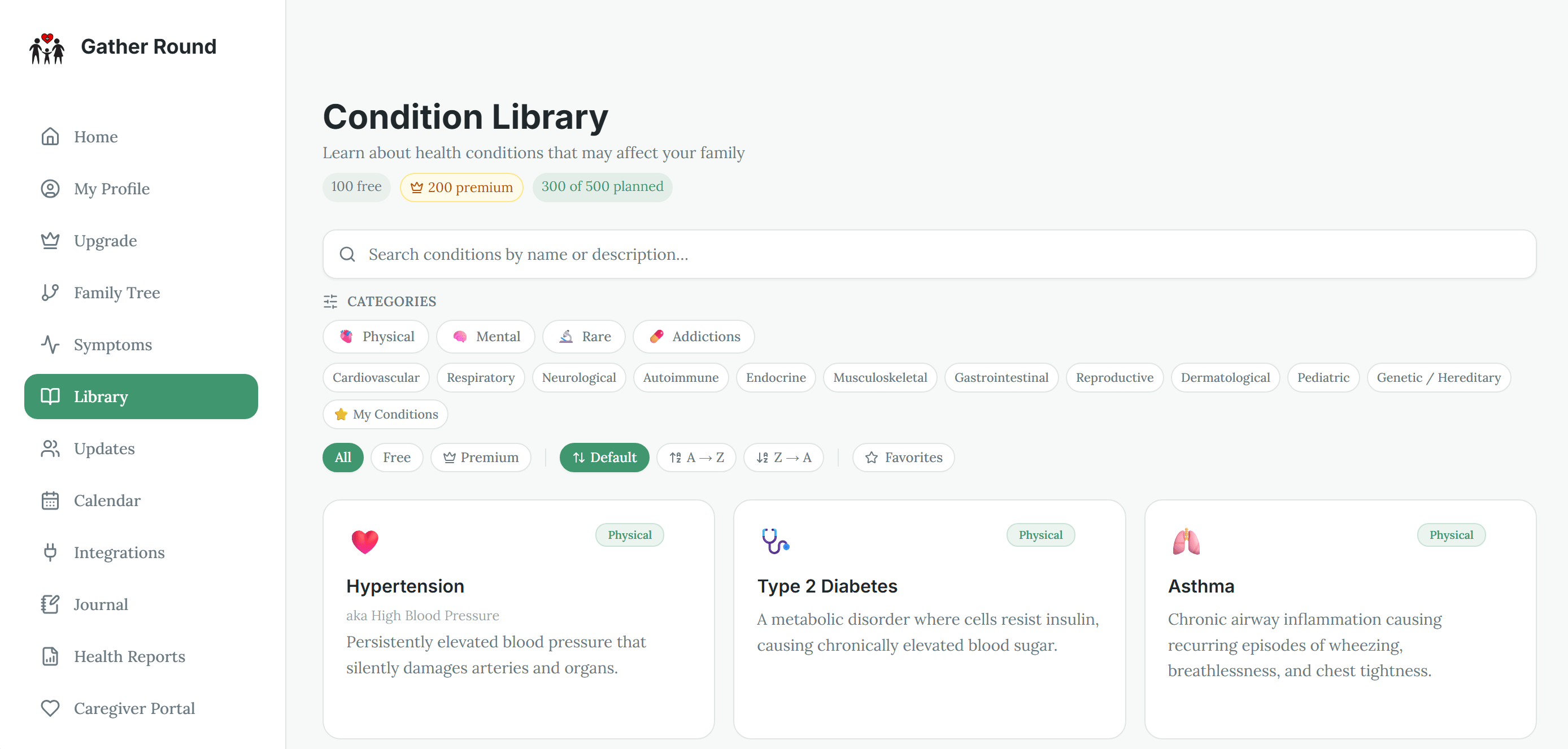
Gather Round is expanding its educational coverage of prescription medications, natural remedies, and complementary and alternative therapies, with content developed with help from our clinical advisor. The goal is to make it easier to look up what you are considering and prepare informed questions, not to replace personalized advice from your care team.
Explore the Gather Round app and Preventive Health Library for accessible, science-based wellness education that can support health literacy and preventative health.
This article is for education, not individual medical advice. A clinician or pharmacist can help assess a specific product alongside your medicines and health history.
Sources
- National Center for Complementary and Integrative Health (NCCIH): Herb-Drug Interactions. What the Science Says
- NCCIH: St. John’s Wort, Usefulness and Safety
- NCCIH: Low-Back Pain and Complementary Health Approaches
- U.S. Food and Drug Administration (FDA): Mixing Medications and Dietary Supplements Can Endanger Your Health
- FDA: Dietary Supplements