

Date: Thursday, October 29, 2026 · Estimated reading time: 5 minutes · Category: Physical Health, Heart & Circulation
Blood pressure readings can look like a code: two numbers, a slash, and a unit. Understanding what those numbers mean can make it easier to keep track of your health and have a more useful conversation with a healthcare provider.
A reading is a snapshot, not a diagnosis by itself. Blood pressure can change throughout the day, and how it is measured matters. Home readings, taken correctly over time, can help show a fuller picture.
What do the two numbers mean?
Blood pressure measures the force of blood pushing against the walls of your arteries.
- The top number (systolic) measures pressure when your heart beats.
- The bottom number (diastolic) measures pressure between beats, when your heart rests.
A reading of 120/80 mm Hg, for example, means a systolic pressure of 120 and a diastolic pressure of 80. “Mm Hg” is a standard unit used to measure pressure.
Both numbers matter. If either number falls into a higher category, the reading is classified in that higher category. For instance, a result of 128/82 is in the stage 1 range because the bottom number is 82.
What do the categories mean?
For adults, the American Heart Association uses these categories:
| Category | Systolic (top number) | Diastolic (bottom number) |
|---|---|---|
| Normal | Less than 120 | And less than 80 |
| Elevated | 120–129 | And less than 80 |
| Stage 1 hypertension | 130–139 | Or 80–89 |
| Stage 2 hypertension | 140 or higher | Or 90 or higher |
These ranges help describe readings and guide follow-up. One reading alone does not confirm hypertension. A clinician considers repeated measurements, your health history, and other factors before making a diagnosis or recommending a plan.
High blood pressure often has no noticeable symptoms. Feeling well does not tell you whether your numbers are in range, which is one reason routine checks can support preventative health and health risk management.
Why can a clinic reading differ from a home reading?
It is normal for readings to vary. Stress, recent activity, caffeine, pain, talking, a full bladder, and measurement technique can all affect the result.
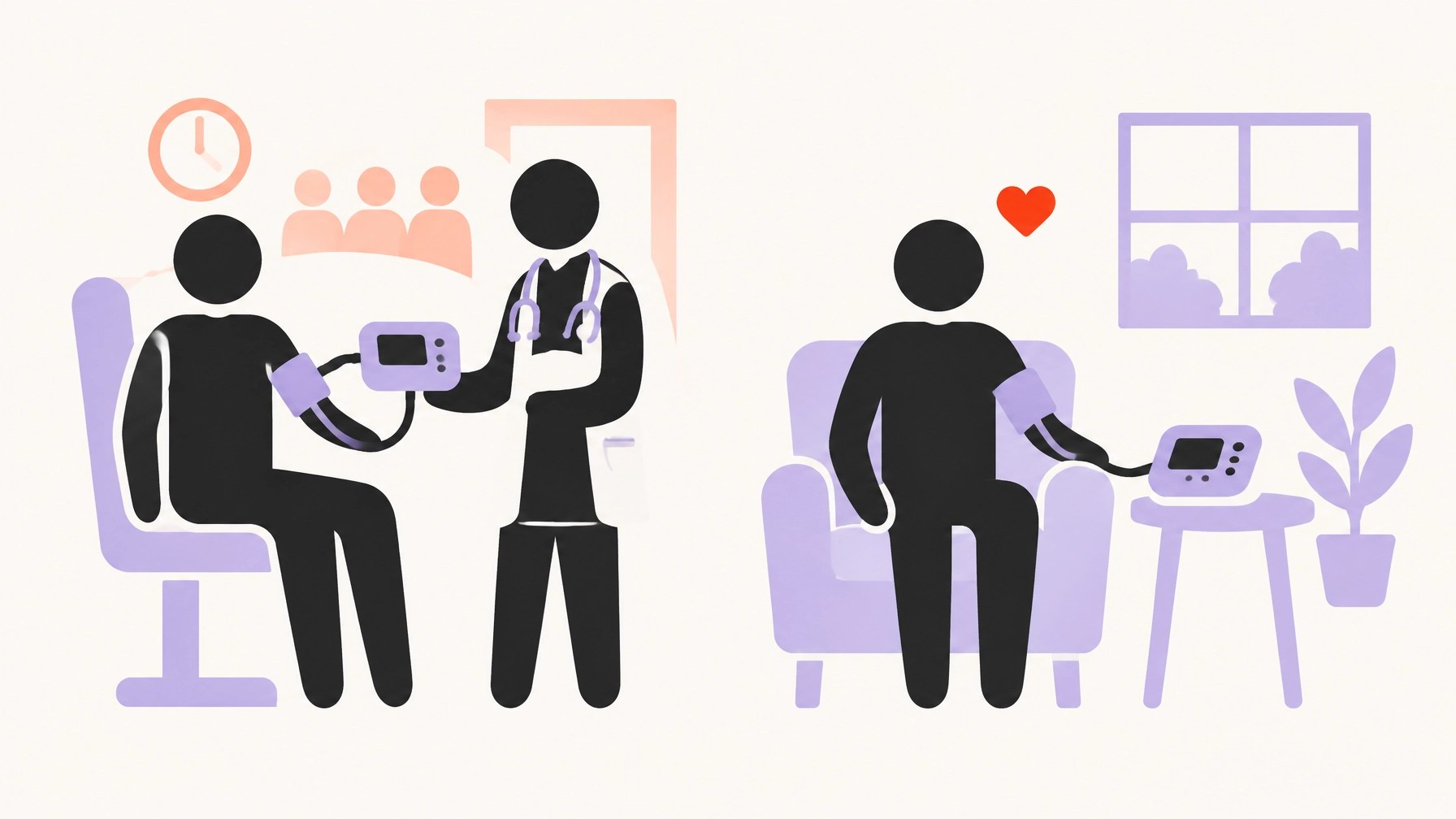
Some people have a higher reading in a medical setting than they usually have elsewhere. This is sometimes called the white coat effect. It does not mean the clinic reading is meaningless; it means your provider may want more information before interpreting the pattern.
Home monitoring can add that context. Use a validated automatic upper-arm monitor if possible. Wrist and finger devices are generally less reliable. The American Heart Association recommends checking whether a monitor is validated and bringing it to an appointment so your care team can compare it with their equipment and check the fit.
How to measure blood pressure at home
For a more dependable reading, follow the monitor’s instructions and use the same routine each time:
- Prepare: For 30 minutes beforehand, avoid smoking, caffeine, and exercise. Empty your bladder.
- Rest: Sit quietly for at least five minutes. Avoid talking, texting, or watching anything that may distract you.
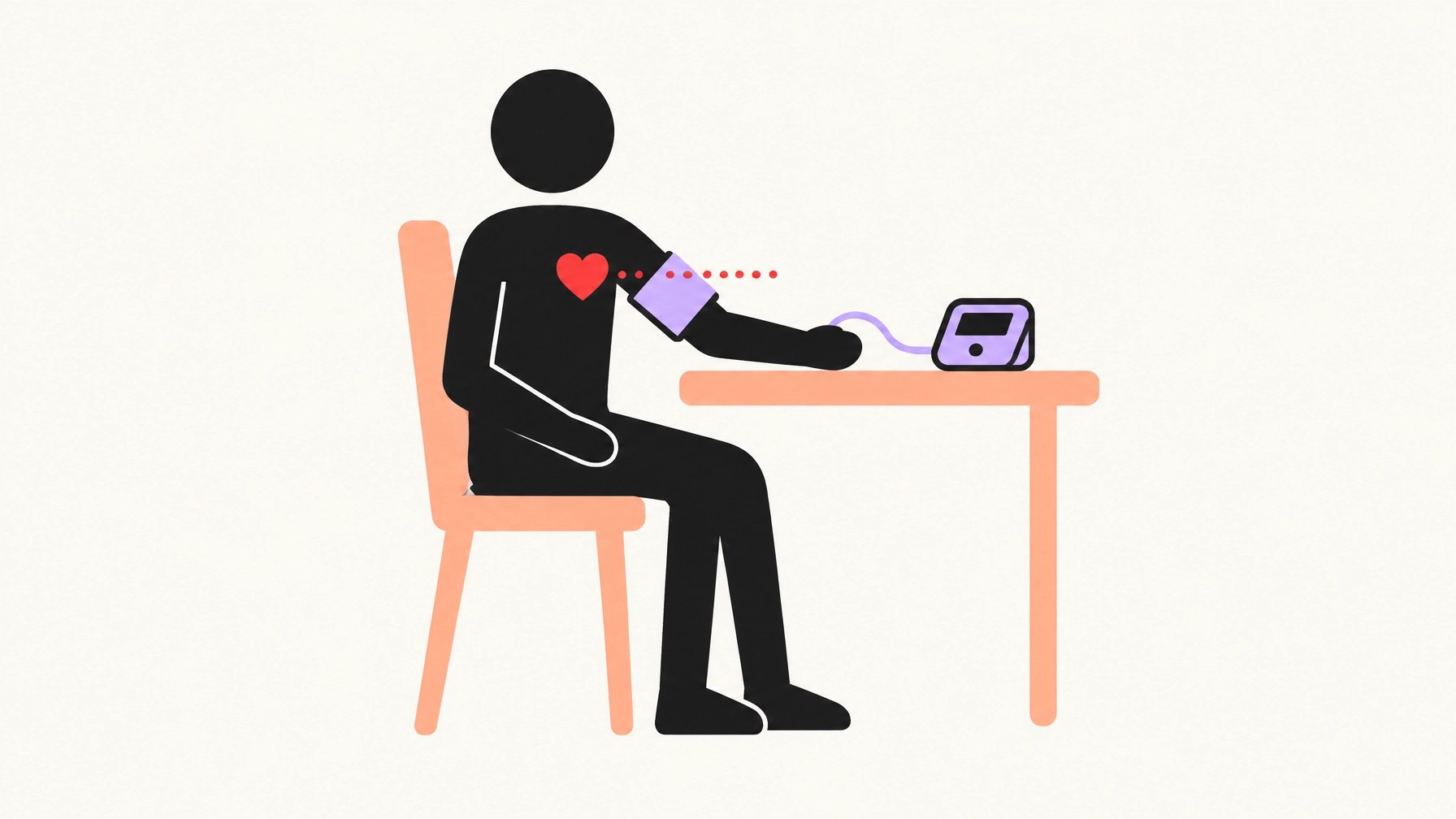
- Sit correctly: Support your back. Keep both feet flat on the floor and your legs uncrossed.
- Position the cuff: Put it on bare skin, not over clothing. Rest your arm on a flat surface so the cuff is level with your heart.
- Choose the right cuff size: Follow the monitor maker’s instructions for measuring your upper arm and selecting a cuff. A cuff that is too small or too large can distort the result.
- Take two readings: Wait one minute between readings. Record both, along with the date and time.
Your provider may recommend checking at particular times or for a set number of days. Ask for a schedule that fits your situation. Don’t take extra readings repeatedly in response to one unexpected result unless your care team advises you to.
What should you record, and when should you share it?
A useful log includes:
- The date and time of each reading
- Both numbers from each measurement
- The arm used, if your provider asks you to track it
- Relevant notes, such as a missed medication dose or feeling unwell
Bring the monitor and log to your appointment, especially if readings at home differ from those at the clinic, or if readings are repeatedly above your recommended range. Ask your provider how often to measure and what pattern should prompt a call.
Do not stop, start, or change blood pressure medication based on home readings without talking to your prescriber.
Questions you can ask your provider
- “What blood pressure range should I aim for?”
- “Is this monitor validated, and is the cuff the right size for me?”
- “How often and at what times should I check at home?”
- “What readings should prompt me to call you?”
- “Could my medications or another health condition affect these results?”
When is a reading urgent?
If a reading is higher than 180 systolic and/or higher than 120 diastolic, sit quietly and take it again after at least one minute.
- If the repeat reading remains that high and you have no new concerning symptoms: Contact a healthcare professional as soon as possible for guidance.
- If it remains that high and you have symptoms such as chest pain, shortness of breath, back pain, numbness, weakness, vision changes, or difficulty speaking: Call 911. Do not wait for the numbers to come down on their own.
If you are pregnant, have a condition that affects your heart or kidneys, or have been given a specific monitoring plan, follow your care team’s instructions. Your situation may call for different guidance.
Access and care matter
Getting a reliable reading should not depend on having expensive equipment, speaking a particular language, or feeling comfortable challenging a rushed appointment. Cuff availability, device fit, access to follow-up, and differences in how pain or risk are interpreted can affect care. If something does not seem right, you can ask for the reading to be repeated after a few minutes of rest, request an appropriately sized cuff, or ask for an interpreter.
Clear health information is part of proactive healthcare. You can also read Gather Round’s plain-language guide to hypertension and explore the Preventive Health Library. These resources support learning and preparation; they do not replace individualized medical advice.