

Date: Wednesday, October 28, 2026
Estimated reading time: 6 minutes
Category: Lifestyle & Preventative Health
Zone 2 cardio is a popular name for steady, moderate-intensity movement. The simplest way to recognize it is by how you feel: you can talk in full sentences, but singing would be difficult.
You don’t need a heart-rate monitor, a gym membership, or an exercise background to begin. Walking, cycling, dancing, and other activities can all count. The goal is to find a pace that feels manageable and build a routine that fits your life.
What is Zone 2 cardio?
“Zone 2” usually refers to a relatively comfortable level of aerobic activity. Movement that raises your breathing and heart rate but still lets you talk. It is a useful fitness term, but it is not one universally standardized medical zone. Heart-rate ranges can vary by person, activity, age, medication, health status, and conditions like heat.
That’s why the talk test is a practical starting point:
- Moderate effort: You can talk, but not sing.
- Harder effort: You can say only a few words before needing a breath.
At a moderate pace, your body uses oxygen to support movement. Regular aerobic activity can support heart and metabolic health. Exercise can also encourage adaptations in mitochondria. The structures inside cells that help produce energy. But current evidence does not show that so-called Zone 2 is uniquely best for everyone’s mitochondria or metabolism. Consistency and an activity you can sustain matter more than chasing a particular zone.

Five practical ways to add it to your week
1. Try a brisk-and-talk walk
Walk at a pace that feels purposeful but controlled. Check in after a few minutes: Can you speak in a full sentence without gasping? If yes, you may be near moderate intensity. If talking feels effortless, try a slightly quicker pace, if that is comfortable and safe for you.
You can use the same test while cycling, dancing, or doing another activity. There’s no need to make every session feel like a workout. A short walk around your neighborhood or indoors is a valid place to start.
2. Begin with three 30-minute sessions
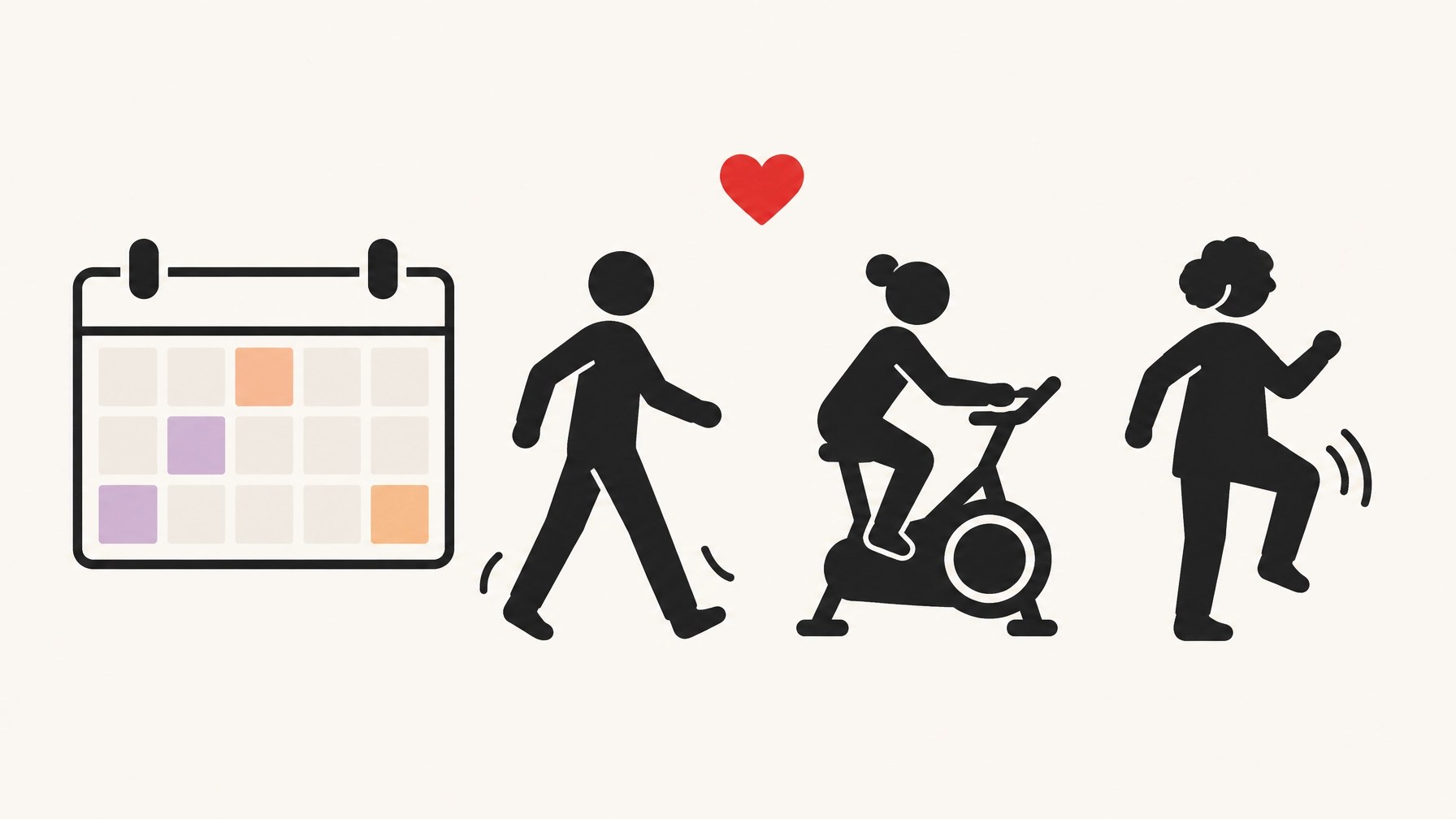
Three 30-minute sessions add up to 90 minutes a week. That can be a reasonable starting target if you’re currently inactive. When it feels manageable, add time or another day.
For context, U.S. physical activity guidelines recommend that adults work toward at least 150 minutes of moderate-intensity aerobic activity each week, along with muscle-strengthening activity on two days. You don’t have to reach that target immediately. Some activity is better than none, and shorter sessions can be spread across the week.
3. Pair movement with something you already do
Linking activity to a regular part of your day can make it easier to remember. For example:
- Walk while listening to a favorite podcast.
- Take a short walk after lunch or dinner.
- Cycle gently while watching a show.
- Walk part of the way to an errand or transit stop, if practical.
Everyday activity may not always reach moderate intensity. That’s fine. Use the talk test rather than assuming every chore or stroll counts toward a specific exercise target.
4. Use the talk test instead of tracking your heart rate
A wearable can be useful if you enjoy tracking, but it isn’t required. Heart-rate formulas and device readings can be imperfect, and some medications affect heart rate. The talk test gives you a low-cost way to adjust your effort in real time.
If you have a health condition, use a mobility aid, or take medication that affects exercise tolerance, ask your clinician whether the talk test is appropriate for you and whether you should follow any specific limits.
5. Build gradually, and adapt the activity to you
Start with a duration and pace that feel doable. For example, try five or ten minutes at a time, then add a few minutes when your body is comfortable with it. You can split activity into several short sessions. You can also choose low-impact or seated movement.
Movement can look different at different ages and abilities. A chair-based routine, indoor walking, water exercise, or gentle cycling may be a better fit than outdoor walking. The best activity is one that works with your body, surroundings, and preferences.
Make the plan accessible
Exercise advice can overlook the real barriers people face. Safe sidewalks, parks, accessible buildings, time, transportation, childcare, cost, and fear of harassment can all affect whether activity is realistic. These are not personal failings.
Lower-cost options may include walking indoors at home, following a free movement video from a reputable source, using a community center, or choosing short movement breaks during the day. If you need an accessible route, a support person, or a different activity, those are reasonable parts of a plan, not exceptions to it.
When should you check with a health professional?
Many people can begin light activity and increase it gradually. Still, check with a healthcare professional before changing your activity substantially if you have a chronic condition, have been inactive and plan to start vigorous exercise, or have been advised to restrict activity.
Stop exercising and seek medical advice if you experience chest discomfort, fainting, unusual or severe shortness of breath, or symptoms that are new or concerning. If symptoms feel severe or urgent, contact emergency services.
You can ask your clinician:
- “What kind and amount of activity is appropriate for my health?”
- “Are there symptoms that mean I should stop?”
- “Could my medication affect my heart rate or exercise tolerance?”
- “What low-impact or seated options might work for me?”
A simple way to begin
Choose one activity you can access, try a few minutes at a conversational pace, and notice how you feel during and afterward. Add time gradually if it suits you. The aim is not a perfect training plan; it’s a sustainable step in your wellness journey.
For more plain-language, science-based information, explore Gather Round’s Preventive Health Library and learn about the Gather Round app, which supports people in understanding and preparing for their health conversations.
Sources
- CDC: What Counts as Physical Activity for Adults
- CDC: How to Measure Physical Activity Intensity
- Physical Activity Guidelines for Americans, 2nd edition
- “Much Ado About Zone 2”: A review of evidence on Zone 2 training
- Systematic review and meta-analysis of moderate-intensity continuous training and mitochondrial adaptations