
Date: October 12, 2026
Reading time: 5 minutes
Category: Preventative Health / Health Literacy
Starting a wellness journey can feel complicated. There are numbers to track, appointments to schedule, medications to remember, and health information to understand.
Your first step does not have to be complicated.
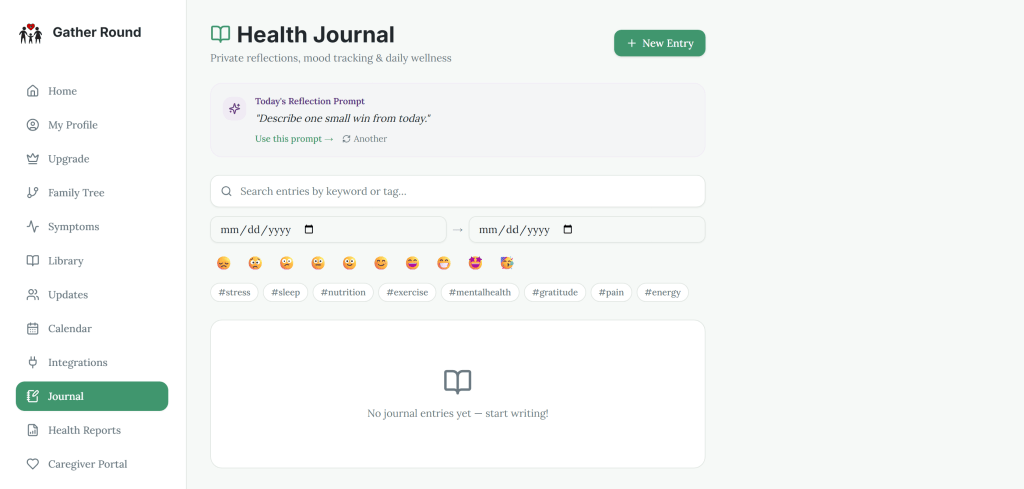
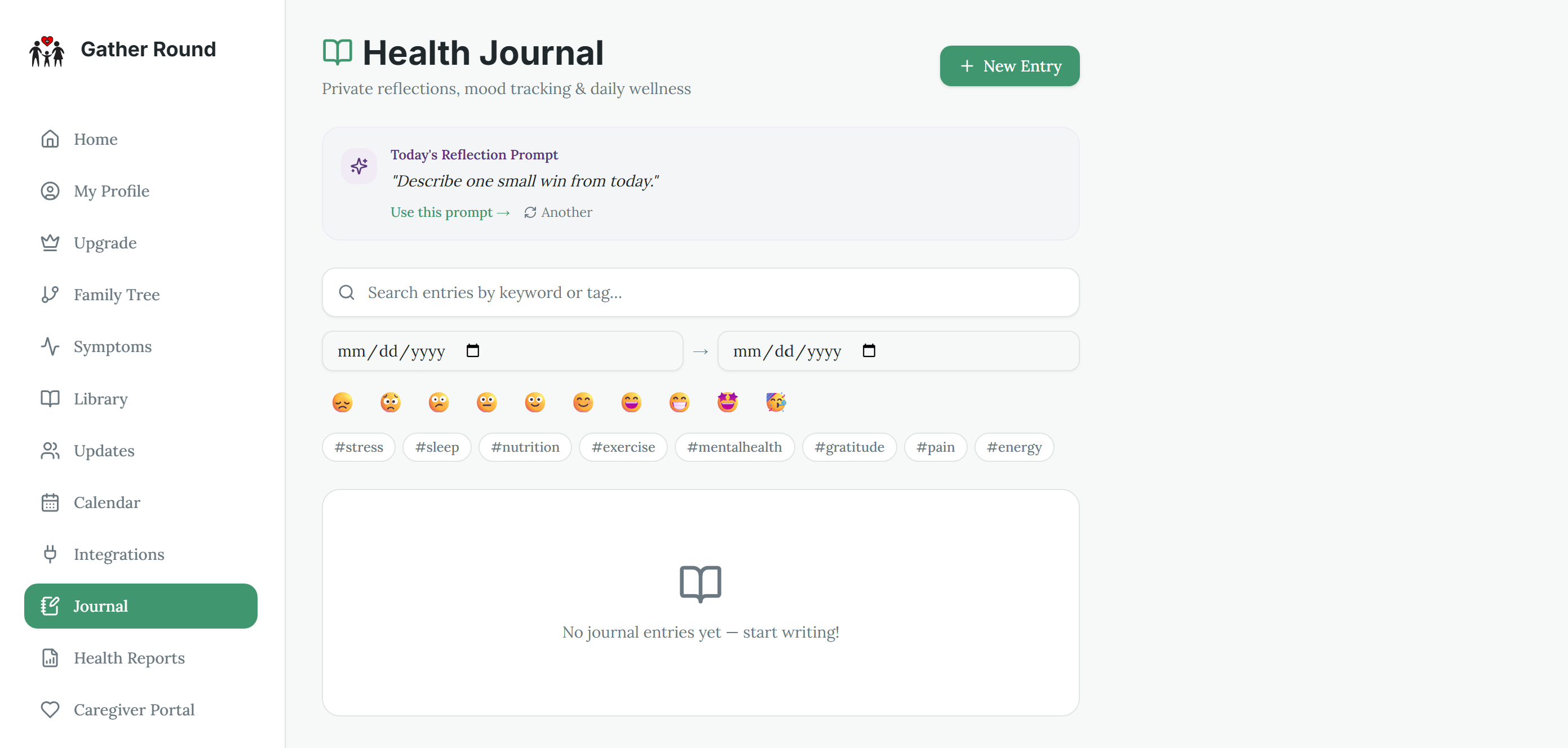
The Health Journal in Gather Round PHA offers a low-pressure place to begin. You can write a single line about how you feel, record a question for your next appointment, or note a change in your routine. Over time, these small entries can help you see your health in context and prepare for more informed conversations with your care team.
Download Gather Round PHA on Google Play
What is the Health Journal?
The Health Journal is a space for recording the experiences, questions, and daily circumstances that shape your health.
It is not a diagnosis tool. It is not a replacement for the Symptom Tracker. It is also not a requirement to write a detailed entry every day.
Think of it as a personal record of your health story between appointments.
The journal can help you:
- Notice changes in your mood, energy, sleep, or routine.
- Remember questions you want to ask a provider.
- Record how you respond to a new medication or treatment.
- Describe how health affects work, school, caregiving, relationships, or daily tasks.
- Capture personal wellness goals in your own words.
- Build confidence and health literacy over time.
Gather Round is designed to make preventive health clearer before a concern becomes a crisis. The journal is one of the gentlest ways to take that first step.
What can you write about?
There is no single correct format. Write what is useful to you.
Mood and emotional well-being
Your emotional health is part of your overall health. You might write:
- “I felt more anxious than usual today.”
- “I had more energy after sleeping well.”
- “I felt overwhelmed managing work and caregiving.”
- “I felt calm after taking a walk.”
These observations do not diagnose depression, anxiety, or another condition. They provide context that may be useful when you review your experiences with a qualified professional.
Questions for your next appointment
Questions are easy to forget, especially when an appointment feels rushed. Use the journal to capture them when they occur.
Examples include:
- “Could this change be related to my medication?”
- “What does this test measure?”
- “What warning signs should I watch for?”
- “Are there preventive steps that fit my current routine?”
- “What should I do if I cannot follow this treatment plan as written?”
Writing questions in advance can support shared decision-making and help you participate more fully in your care.
Routine changes
Small changes may affect how you feel. Consider noting:
- A different sleep schedule.
- A new work shift.
- Increased or decreased movement.
- A change in meals or hydration.
- Travel or a change in environment.
- A new caregiving responsibility.
- A change in stress levels.
The goal is not to blame yourself for every health change. The goal is to create a fuller picture.
Medication experiences
You can record how a medication or treatment fits into your day. For example:
- When you took it.
- How you felt afterward.
- Whether you noticed a possible side effect.
- Whether it affected your sleep, appetite, mood, or energy.
- Questions you want to raise with your pharmacist or provider.
Do not stop, restart, or change a prescribed medication based only on a journal entry. Contact your prescriber or pharmacist for medication guidance.
Personal goals
Goals can be clinical, practical, or personal.
You might write:
- “I want to understand my blood pressure readings.”
- “I want to prepare for my annual visit.”
- “I want to build a more consistent sleep routine.”
- “I want to have enough energy for time with my family.”
- “I want to feel more comfortable asking questions.”
A goal does not need to be ambitious to be meaningful.
Why context beyond numbers matters
Health information often comes as a number: a blood pressure reading, a lab result, a weight, or a symptom rating. Numbers can be useful, but they do not explain everything happening around them.
Context may include:
- Sleep: How long you slept and whether you felt rested.
- Stress: Work demands, financial concerns, conflict, or uncertainty.
- Caregiving: Supporting a child, partner, parent, or another loved one.
- Work: Shift schedules, physical demands, limited breaks, or job insecurity.
- Food access: Whether nutritious food was affordable, available, or practical that week.
- Emotional well-being: Feelings of loneliness, fear, grief, or connection.
- Access to care: Transportation, appointment availability, cost, language, or insurance barriers.
These factors are not signs of personal failure. They are part of the conditions in which people live and make health decisions. The CDC describes social determinants of health as nonmedical factors that influence health outcomes.
A person working overnight may have difficulty maintaining a typical sleep schedule. A caregiver may postpone their own appointment. Someone facing food insecurity may not be able to follow nutrition advice that assumes consistent access to fresh food.
A compassionate health record makes room for these realities.
It also helps address a common problem in healthcare: patients may be misunderstood when their lived experience, culture, language, or circumstances are left out of the conversation. A journal cannot eliminate medical bias, but it can help you document what is happening in your own words and identify questions that deserve attention.
One line a day is enough
You do not need to write a page. Start with one line.
Try one of these prompts:
- “Today I noticed…”
- “My energy was…”
- “One thing that affected my health today was…”
- “I want to ask my provider…”
- “A routine change this week was…”
- “My goal for tomorrow is…”
Examples:
“I slept five hours and felt tired during my afternoon shift.”
“I started a new medication and want to ask about nausea at my next visit.”
“I had less stress today after asking a family member for help.”
“I want to understand whether my recurring headaches should be evaluated.”
Consistency matters more than length. A short entry can become useful when viewed alongside other entries over several days or weeks.
How journal entries support Health Reports
Your journal entries can feed into Gather Round’s Health Reports, helping organize your observations into a format you can review and use.
A report may help you identify:
- Repeated concerns.
- Changes in mood, energy, or routine.
- Questions that have come up more than once.
- How health experiences affect daily life.
- Information you may want to discuss with a provider.
Gather Round’s Health Reports also include tools for organizing other health information, such as symptom summaries, condition overviews, family history, wellness journal information, wearable data, and comprehensive reports.
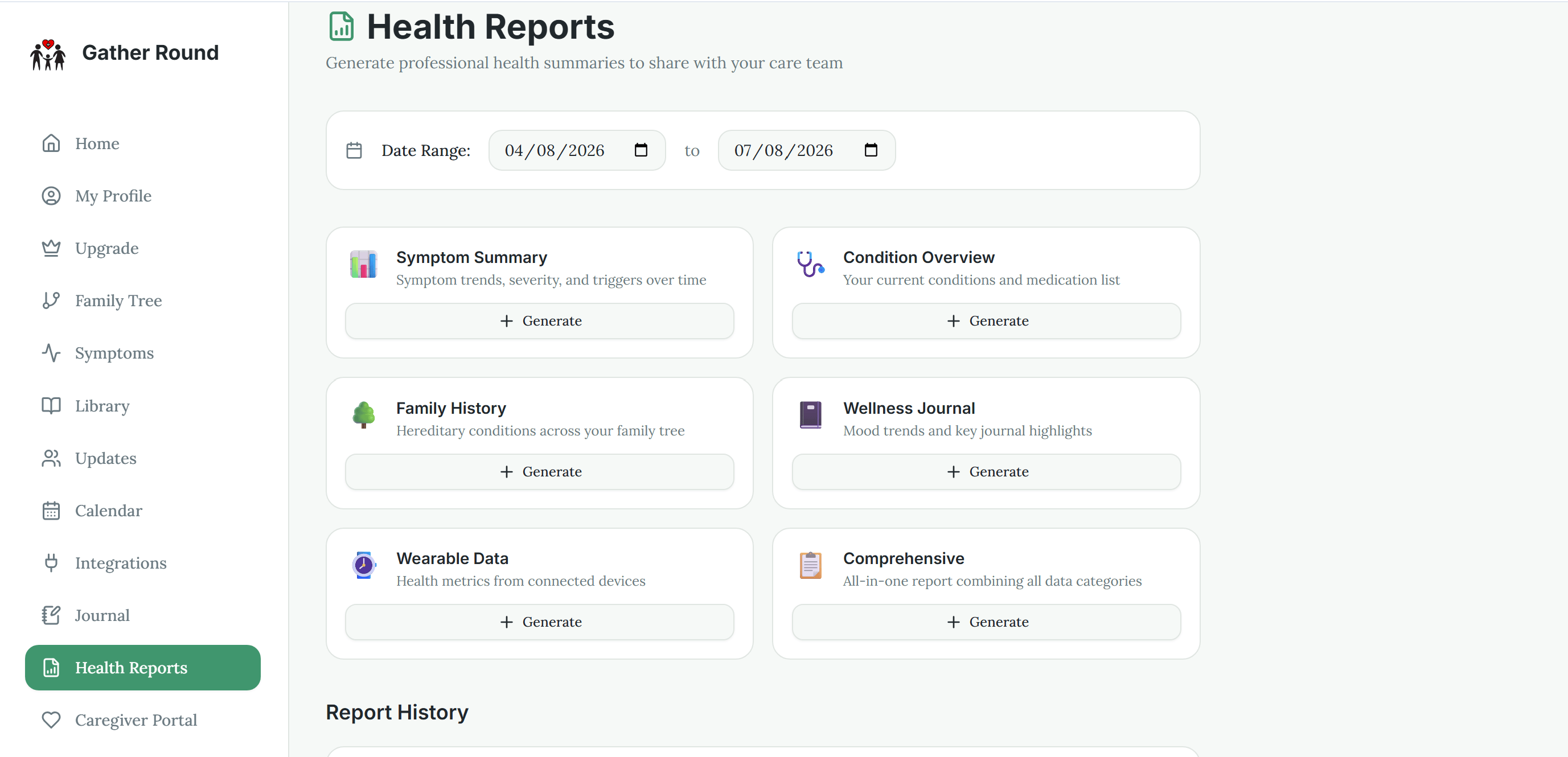
Before sharing a report, review it for accuracy and remove anything you do not want to disclose. A report can support a medical conversation, but it does not replace professional assessment, testing, or treatment.
Privacy and data safety
Gather Round describes a specific HIPAA-compliant data pipeline for health information:
- CMS: The Gather Round public website uses WordPress as its content management system. WordPress stores public educational content and does not store protected health information (PHI).
- App: The Gather Round app uses Base44 for the user interface and application logic. According to the Gather Round Privacy Policy, PHI is not stored in Base44.
- Backend: PHI entered into the app is stored exclusively in Back4App HIPAA, Gather Round’s secure, encrypted, HIPAA-compliant backend.
- Reports and access: App data is processed through the backend to support features such as Health Reports. Security measures include encryption, access controls, audit logs, and secure hosting.
Gather Round states that it does not sell health information and does not share PHI with advertisers or non-HIPAA-compliant vendors. Review the full Privacy Policy for details about data collection, use, access, and deletion requests.
When to seek care
The Health Journal is not an emergency service or a diagnostic tool.
Seek emergency help for symptoms such as severe difficulty breathing, chest pressure or pain, sudden weakness or confusion, uncontrolled bleeding, or another condition that feels immediately dangerous. In the United States, call 911.
For symptoms that are new, worsening, persistent, or interfering with daily life, contact a qualified healthcare professional. Do not wait for a journal pattern if you are concerned about a serious change.
Questions to bring to your provider
You can use your journal to say:
- “Here is what changed and when I first noticed it.”
- “This is how it has affected my sleep, work, or daily activities.”
- “These are the situations that seem to make it better or worse.”
- “I started or changed this medication, and I noticed…”
- “What should I monitor at home?”
- “What symptoms mean I should contact you sooner?”
- “Can you explain this result in plain language?”
- “What preventive steps are realistic for my circumstances?”
These questions support personal health literacy: the ability to find, understand, and use health information to make decisions.
Start your wellness journey gently
Preventative health does not require perfection. It begins with noticing, asking, and understanding.
Open the Health Journal in Gather Round PHA and write one line today. You can describe your mood, record a question, note a routine change, or name a goal. That small entry can become part of a clearer health story, and a more informed path to wellness.
Download Gather Round PHA on Google Play
Reputable sources
- Agency for Healthcare Research and Quality: Personal Health Literacy
- Centers for Disease Control and Prevention: Health Literacy
- Centers for Disease Control and Prevention: Social Determinants of Health
- HealthIT.gov: Patient Engagement Playbook
- Gather Round PHA: The App
- Gather Round PHA: Preventive Health Library
- Gather Round PHA: Privacy Policy
- Gather Round PHA on Google Play